

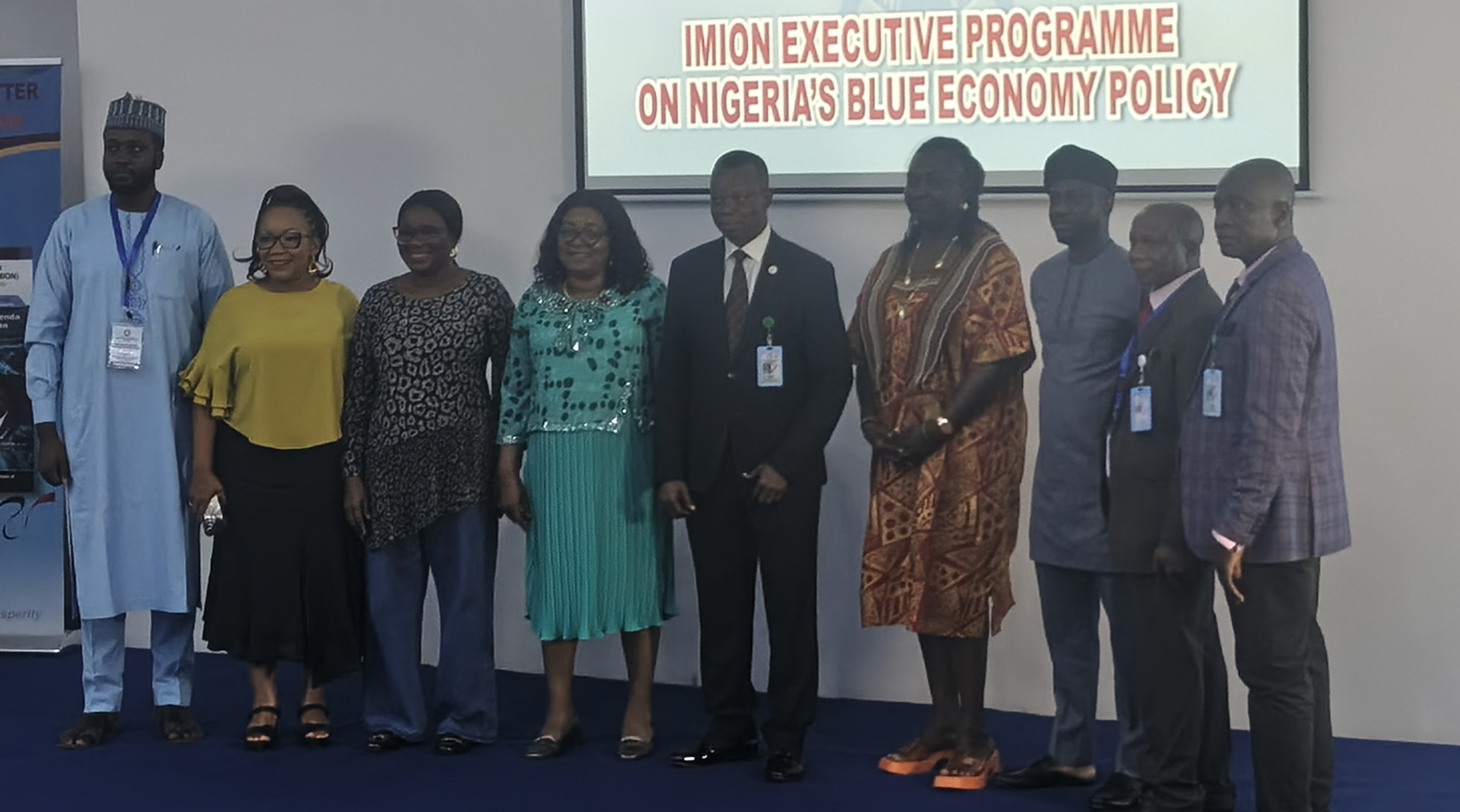
The International Maritime Institute of Nigeria (IMION), an independent body of the Nigerian Navy, has declared that Nigeria’s blue economy ambitions must now transition from policy conversations to measurable action, as it formally closed its three-day Executive Programme on Nigeria’s Blue Economy Policy in Apapa, Lagos.
IMION stated that the high-level programme, which commenced on Wednesday, April 15, and concluded on April 17, delivered a deeply engaging and intellectually rewarding platform that drew robust participation from across the maritime ecosystem.
The institute emphasised that the depth of discourse, quality of contributions, and diversity of stakeholders underscored the growing national urgency around unlocking the vast potential of Nigeria’s marine and coastal resources.
IMION noted that the integration of virtual participation significantly expanded the reach of the programme, reinforcing its strategic vision to leverage technology in positioning itself as Nigeria’s centre of excellence for maritime affairs.
According to IMION, the programme traversed critical themes including maritime security, ocean governance, environmental sustainability, and energy security, all framed within the broader architecture of the blue economy.
The institute stressed that discussions throughout the programme interrogated both opportunities and constraints, while advancing innovative approaches anchored on collaboration among government, academia, industry, and civil society in line with the Triple Helix model.
IMION declared that a central takeaway from the engagement was unmistakable: no single institution can drive the blue economy agenda alone, as success depends on sustained cooperation, strategic alignment, and a shared national vision.
It urged participants to return to their organisations as change agents, translating insights into actionable policies and programmes capable of delivering tangible socio-economic benefits and environmental protection.
IMION maintained that the ocean must be viewed not merely as a resource but as a legacy, warning that present decisions will ultimately define how future generations experience and benefit from maritime wealth.
The institute expressed profound appreciation to its resource persons, partners, and participating organisations, noting that their technical inputs and institutional support enriched the programme and strengthened its outcomes.
IMION specifically highlighted the contributions of stakeholders across the public and private sectors, describing their involvement as critical to building a cohesive and informed maritime community.
It reaffirmed its mandate to promote excellence in maritime knowledge, deepen interagency cooperation, and sustain capacity building initiatives that will strengthen both national and regional ocean governance frameworks.
IMION also acknowledged the support of the Chief of the Naval Staff, stating that his commitment was instrumental to the successful delivery of the executive programme.
The institute further commended members of its governing board for their presence and contributions, both physical and virtual, describing their guidance as pivotal to the programme’s success.
In formally declaring the programme closed, IMION expressed confidence that the knowledge shared and partnerships forged would catalyse meaningful progress in Nigeria’s blue economy trajectory.
Participants echoed IMION’s optimism, with a representative from NIMASA, Mrs Lilian Ode, stating that the programme provided deeper clarity on the blue economy as Nigeria’s emerging growth frontier, while highlighting ongoing sensitisation efforts targeting grassroots communities.
IMION reported that private sector stakeholders also underscored the importance of community engagement and security, with Dangote Ports Operations noting that inclusive development and awareness are essential to safeguarding investments and ensuring sustainability.
From the legal and advisory perspective, IMION conveyed that its consultant and resource person, Mrs Mfon Ekong Usoro, observed that the institute has recorded remarkable growth within a short period, attracting high-level participation and advancing the shift from resource exploitation to sustainability-driven blue economy principles.
IMION added that contributions from security and border management stakeholders reinforced the need for political will, awareness creation, and coordinated implementation, noting that the blue economy holds transformative potential for national development.
The institute concluded that the unveiling of its official newsletter during the programme marks a strategic step toward sustaining professional discourse and expanding engagement within Nigeria and the wider Gulf of Guinea maritime domain.
IMION affirmed that the success of the executive programme signals growing national alignment around the blue economy, expressing optimism that the momentum generated will translate into enduring policy impact and economic growth.