

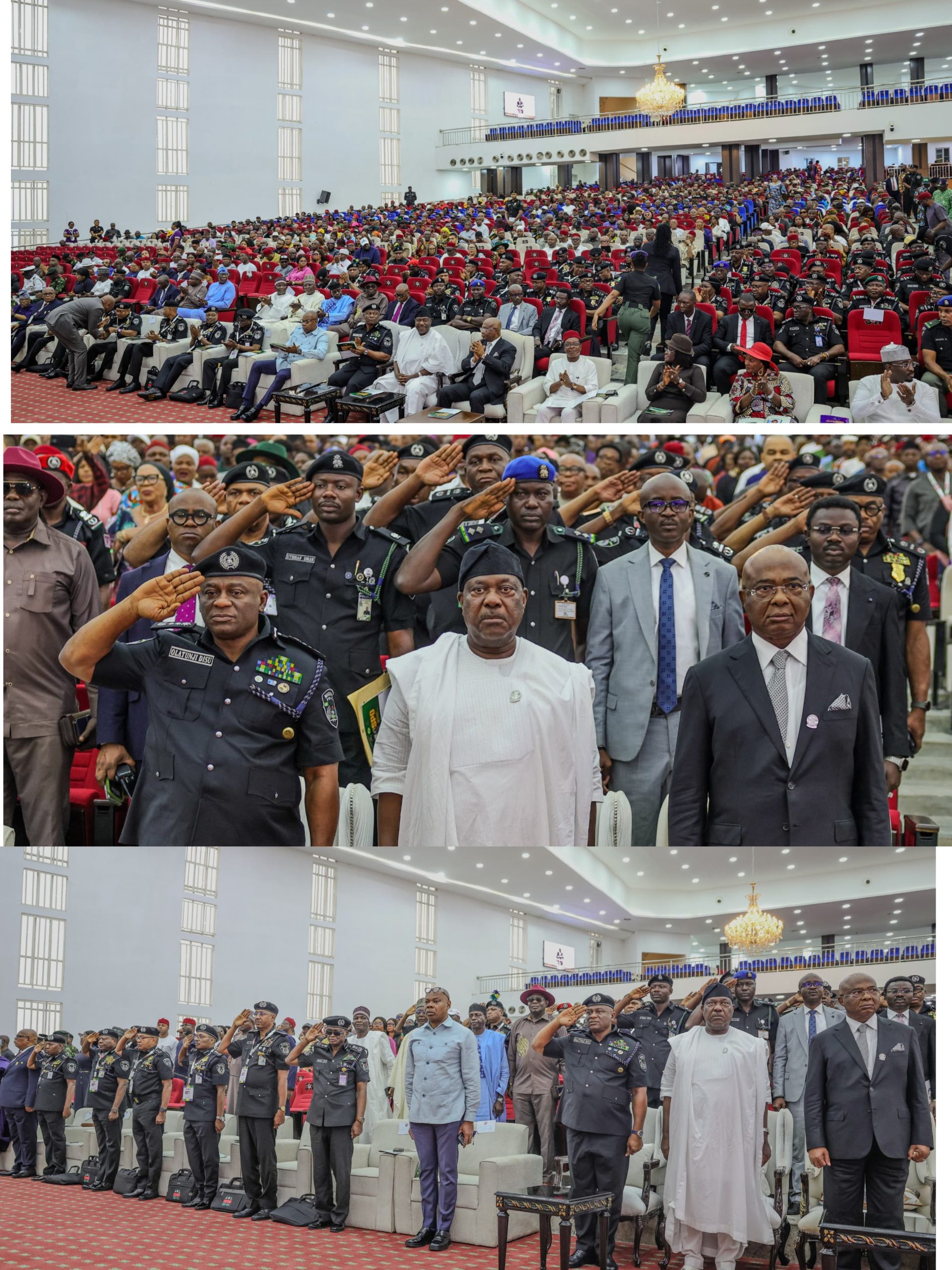
Inspector-General of Police, Olatunji Disu, has unveiled a six-point security roadmap for the 2027 general elections, directing police formations across the country to intensify intelligence gathering, strengthen operational training, improve inter-agency coordination, accelerate communication, deepen community engagement and maintain strict political neutrality.
Disu disclosed the strategy on Monday in Owerri, Imo State, while opening the 2026 Conference and Retreat for Senior Police Officers (CARSPO), a three-day strategic meeting focused on developing a Nigeria Police roadmap for effective management of election security. The conference is being held from September 21 to 23 under the theme, “Developing a Nigeria Police Roadmap for Effective Management of Security During Elections.”
Under the first plank of the roadmap, the IGP directed police commanders to commence immediate mapping of electoral flashpoints, criminal networks and other potential sources of violence, stressing that credible intelligence must reach operational commands early enough to enable timely intervention. He said security planning must prioritise vulnerable groups, including women, elderly citizens and persons with disabilities, whose ability to participate safely is central to the integrity of the electoral process.
Disu said the Force would also intensify specialised training for personnel expected to participate in election duties. Such training, he explained, would cover crowd management, protection of electoral materials and personnel, rules of engagement and human-rights-compliant policing, with the objective of ensuring that officers are adequately prepared for the complexities of election security.
The IGP further emphasised the need for stronger coordination between the police, the Independent National Electoral Commission (INEC) and other security agencies. He directed that joint exercises and planning sessions be used to establish clear command structures, communication channels and responsibilities before election-related incidents occur, rather than attempting to resolve coordination challenges after a crisis has started. The Police had previously announced that intelligence mapping, movement of electoral materials and personnel, inter-agency coordination and counter-misinformation measures were already being incorporated into its election-security preparations.
Another major component of the strategy is the rapid management of election-related misinformation and disinformation. Disu raised concern about the potential impact of fake election results, forged police statements and inflammatory videos circulated online, directing the Force to monitor and counter such content swiftly. He also warned that individuals who use digital platforms to incite violence could face investigation and prosecution in accordance with the law.
Drawing lessons from the 2026 Osun State governorship election, which he described as largely peaceful despite isolated incidents of voter intimidation and inducement, the IGP ordered a review of the Force’s intelligence capabilities, response times and training gaps. The Police had deployed senior officers and established a coordinated security arrangement involving other agencies for the Osun poll.
Disu also issued a firm warning on police neutrality, saying officers must not take sides, harass voters or collaborate with political actors during elections. He directed that any personnel found compromising their professional responsibilities would be investigated and sanctioned, while Commissioners of Police across the country were instructed to make official contact numbers available to the public to facilitate rapid reporting of security concerns.
The IGP tasked participants at the retreat with producing a practical framework covering election-security training, deployment and command arrangements. He cautioned that the outcome of CARSPO must translate into operational action rather than become “another document on a shelf,” and set October 12 as the deadline for completing the roadmap and establishing an election-security task force. His closing message to officers was encapsulated in four words: “Neutral. Prepared. Present. Accountable.”
Beyond preparations for the 2027 elections, Disu presented an eight-month operational scorecard covering the period since he assumed office in February. According to the IGP, police operations during the period resulted in the arrest of 1,643 suspects and the rescue of 1,066 kidnapping victims. The arrests comprised 251 terrorists and suspected bandits, 343 murder suspects, 566 suspected armed robbers and 483 suspected cultists.
The operational figures also included the recovery of 947 firearms and more than 22,000 rounds of ammunition, according to the IGP. Disu, however, acknowledged that security statistics alone offered little comfort to Nigerians still affected by kidnapping, banditry, terrorism and communal violence, stressing that the Force would continue to tackle these threats while preparing for the electoral cycle.
He also paid tribute to police officers who lost their lives in the line of duty and pledged improved welfare for their families and serving personnel. His remarks came as the retreat coincided with the International Day of Peace, observed globally under the theme, “Invest in Peace — For Everyone, Everywhere, Every Day.” The opening ceremony at the Emmanuel Iwuanyanwu International Convention Centre in Owerri brought together senior government officials, security chiefs, political and institutional representatives and business leaders.
CARSPO, organised annually by Lenders Consult in collaboration with the Nigeria Police Force and other partners, provides a platform for senior police officers and security stakeholders to assess emerging threats, examine policing strategies and develop measures for more effective and accountable law enforcement. The Nigeria Police Force said ahead of this year’s edition that the conference would also consider intelligence-led policing, police-community partnerships, digital technologies and artificial intelligence as tools for strengthening election security.