

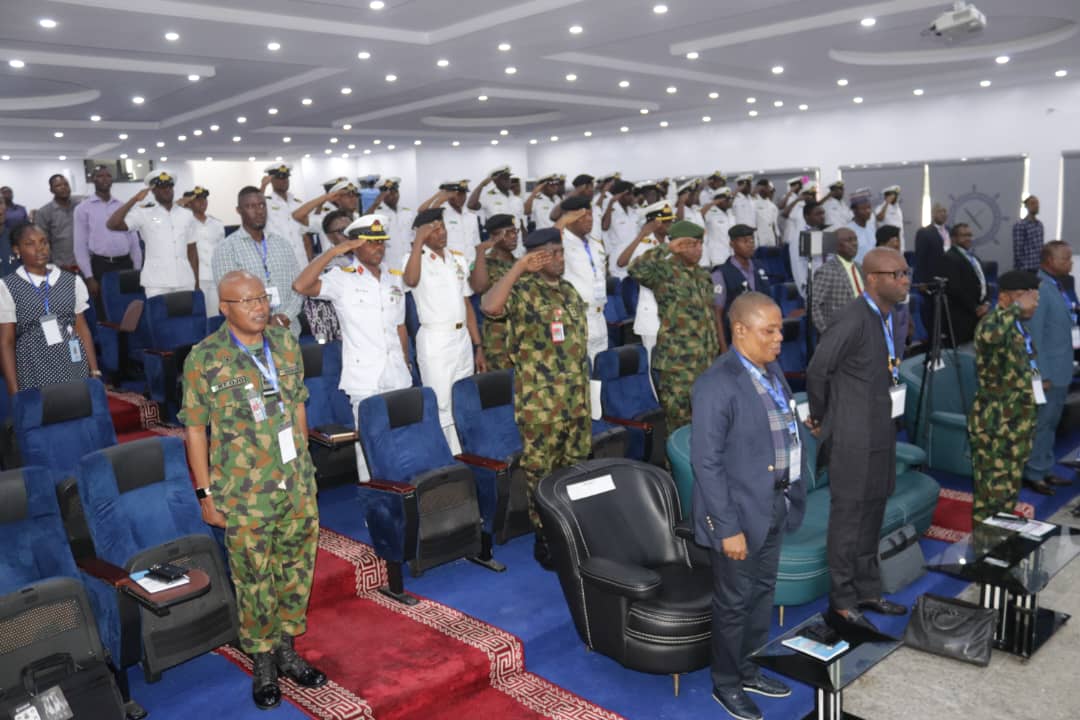
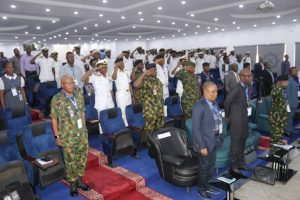
The International Maritime Institute of Nigeria (IMION) has launched a two-day executive course focused on Sustainability for the Blue Economy, bringing together maritime experts, industry stakeholders, and policymakers to explore strategies for sustainable ocean governance, environmental preservation, and inclusive economic growth.
Held from May 22 to 23 at the institute’s Lagos facility, the course is designed to equip participants with the knowledge, tools, and frameworks necessary to drive a resilient and future-focused blue economy in Nigeria and the Gulf of Guinea.
In his welcome address, IMION’s Executive Director of Administration, Commodore Isa Abubakar Ahmed, expressed delight at the presence of key players from the maritime space. He emphasized the critical role of stakeholders in building a future where economic ambition is aligned with environmental stewardship.
“The maritime sector stands at the frontline of both challenges and opportunity,” Ahmed said. “Let us use this opportunity to forge strong partnerships, challenge conventional thinking, and commit to actionable strategies that ensure long-term prosperity for communities, industries, and our ecosystems.”
Declaring the course open, the Director-General of IMION, Rear Admiral Thaddeus Udofia (Rtd), described the gathering as more than an academic exercise but a strategic move to safeguard one of Nigeria’s greatest assets—the ocean. He reiterated that the sustainability of ocean resources is both an environmental imperative and a business necessity.

“As custodians of Nigeria’s maritime domain, we must see the ocean not just as a resource to be exploited, but as a legacy to be preserved,” Udofia said. “Our goal is to equip leaders with the capacity to advance sustainable maritime policies, innovative technologies, and climate-smart strategies.”
Over the course of two days, participants will be exposed to key learning areas including environmental impact assessments, regulatory frameworks, innovation and financial mechanisms, stakeholder engagement, and strategic planning for sustainable ocean-based projects. Discussions will also explore real-world case studies and community engagement models that have successfully achieved social sustainability outcomes.
Rear Admiral Dennis Chris Udofia (Rtd), also speaking at the forum, reinforced the importance of responsible decision-making in the maritime sector. He reminded participants that the health of the oceans for future generations depends on the actions taken today.
“This course emphasizes that as we tap into the ocean’s wealth, we must also preserve it,” he said. “I urge stakeholders to take advantage of the platform IMION offers—where research, strategy, and innovation converge to shape the maritime future of our nation and the Gulf of Guinea.”
He also encouraged industry participants to continually invest in workforce training and professional development through the institute’s regular programs, as a well-equipped workforce is critical to delivering high-quality maritime services.
The IMION Executive Course on Sustainability for the Blue Economy is part of the institute’s broader agenda to promote sustainable development in the maritime sector and align Nigeria’s blue economy efforts with global best practices.