

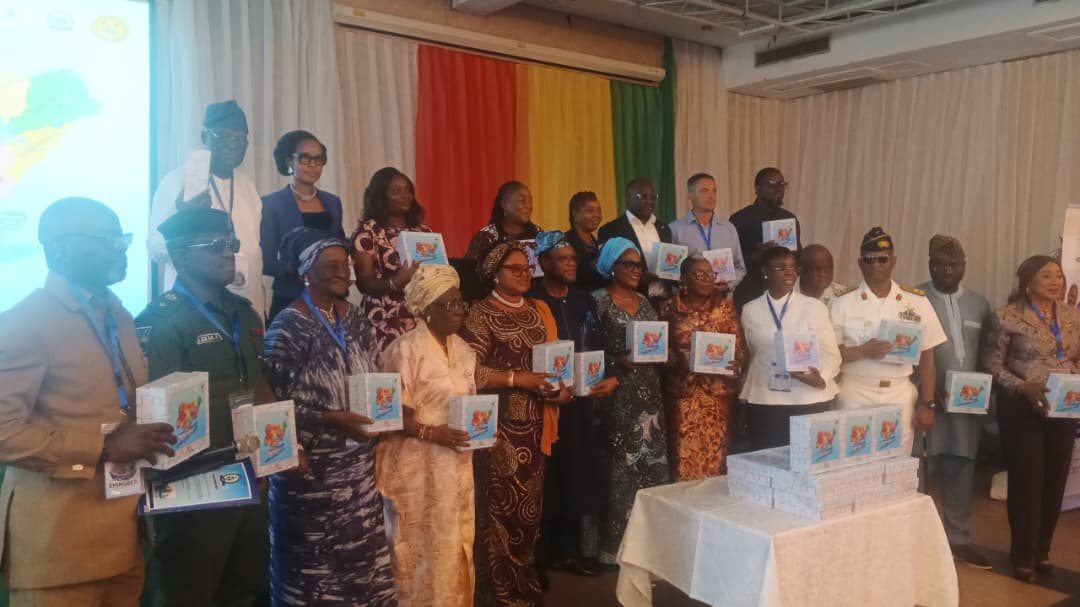
Experts and key stakeholders at the 4th Ehingbeti Maritime Hub Summit have called for the establishment of a dedicated Coastal Resilience Fund to strengthen coastal communities, protect critical infrastructure and accelerate sustainable development across Nigeria’s maritime sector.
The call formed part of the major recommendations emerging from the summit, which focused on strategies for unlocking Nigeria’s blue economy potential through stronger governance, maritime security, sustainable financing, infrastructure development and community participation.
The 4th Ehingbeti Maritime Hub Summit was held at the Oriental Hotel, Victoria Island, Lagos, bringing together policymakers, maritime professionals, legal experts, security agencies, insurers, investors, academics, traditional rulers and representatives of coastal communities.
Delivering the keynote address, President of the Maritime Arbitrators Association of Nigeria (MAAN), Chief Jean Chiazor Anishere, SAN, said Nigeria needed a dedicated financing mechanism capable of addressing the infrastructure and developmental challenges confronting coastal communities.
Anishere said the proposed Coastal Resilience Fund could provide a sustainable platform for financing coastal protection projects, resilient infrastructure, livelihood programmes and other interventions designed to improve living conditions in vulnerable communities.
She also urged Nigeria to take greater advantage of international financing opportunities available through climate funds, development banks and multilateral institutions to mobilise resources for coastal resilience and community development.
According to her, sustained investment in coastal resilience would not only protect communities and livelihoods but also create the infrastructure and economic conditions required for residents to participate meaningfully in the country’s emerging blue economy.
The maritime expert stressed that Nigeria’s blue economy ambitions must be supported by effective governance, insisting that appropriate legal and institutional frameworks were necessary to promote innovation, attract investment and ensure the sustainable exploitation of marine resources.
She called for a regulatory environment that gives investors greater certainty while remaining flexible enough to encourage innovation, environmentally responsible enough to protect marine ecosystems and inclusive enough to ensure that coastal populations benefit from maritime economic activities.
Anishere identified security, sustainability and good governance as three critical pillars for the long-term development of Nigeria’s blue economy, warning that weaknesses in any of these areas could undermine the sector’s growth prospects.
She further advocated improved waste-management systems, sustainable fishing practices, recycling education and environmental stewardship programmes capable of delivering tangible benefits to people living in coastal communities.
The keynote speaker also called for increased private-sector participation in blue tourism, resilient infrastructure and marine-based enterprises, saying appropriate incentives, simplified regulatory processes and effective public-private partnerships could help unlock investment opportunities.
Representing Lagos State Governor, Mr. Babajide Sanwo-Olu, the Permanent Secretary, Lagos State Ministry of Tourism, Arts and Culture, Mrs. Bopo Oyekan-Ismaila, reaffirmed the state government’s commitment to an inclusive approach to blue economy development.
Oyekan-Ismaila noted that although the historical story of Ehingbeti is closely linked to Lagos Island, the state’s contemporary blue economy strategy would extend to coastal and maritime communities across Lagos.
She said Governor Sanwo-Olu had encouraged participants at the summit to collaborate and produce a communiqué capable of advancing the blue economy agenda and supporting sustainable maritime development in Lagos State.
The Convener of the Ehingbeti Maritime Hub and Founder of the Ocean Ambassadors Foundation, Hon. Olaitan Violet Williams, explained that the Hub was established in 2023 to trace, preserve and reconnect with the historical roots of maritime activities in Lagos.
Williams said Ehingbeti represented an important chapter in Lagos’ transformation, linking the city’s early trading activities and maritime heritage with the development of modern-day Eko.
She identified Nigeria’s inland waterways as one of the immediate opportunities capable of contributing significantly to the country’s blue economy, while calling for increased investment and stronger legal protection for investors in the sector.
According to Williams, Nigeria’s estimated 10,000 kilometres of waterways cannot realise their full economic potential if large portions remain difficult or impossible to navigate, stressing the need for infrastructure investment and effective regulation.
Chairman of the occasion and Chairman of the Governing Board of the National Inland Waterways Authority (NIWA), Alhaji Mukhtar Shehu Shagari, represented by NIWA Board Member, Capt. Tajudeen Alao, commended Williams for her efforts to promote Nigeria’s maritime and blue economy agenda.
Shagari emphasised the importance of placing coastal communities at the centre of blue economy policies and advocated the development of an appropriate legal framework to support sustainable economic activities across Nigeria’s littoral states.
Representing the Flag Officer Commanding, Western Naval Command, Rear Admiral Abubakar Mustapha, Rear Admiral N.C. Okon called for stronger maritime regulation and more effective enforcement of existing laws to create a safer environment for maritime commerce and investment.
Okon identified what he described as “sea blindness” as one of the factors limiting Nigeria’s ability to fully appreciate and exploit its vast maritime resources, stressing that government institutions, coastal communities and development partners must work together.
He noted that Nigeria’s blue economy ambitions could not be sustained in an environment characterised by insecurity, environmental degradation, illicit maritime activities and regulatory uncertainty, while reaffirming the Nigerian Navy’s commitment to maritime security.
Also speaking at the summit, Chairman of the Nigerian Council of Registered Insurance Brokers (NCRIB), Ekeoma Ezeibe, described insurance as an essential component of maritime and blue economy development.
Ezeibe said adequate insurance coverage was necessary to protect maritime assets, infrastructure and businesses from the range of operational, environmental and commercial risks associated with the sector.
A key highlight of the summit was the official launch of the 28 Inland Waterways Investment Jigsaw, an initiative designed to showcase investment opportunities across Nigeria’s inland waterways and provide a structured framework for greater private-sector participation in water transportation and related marine enterprises.
The 4th Ehingbeti Maritime Hub Summit ultimately underscored the need for Nigeria to combine sustainable financing, resilient infrastructure, effective regulation, maritime security and community inclusion if it is to translate its considerable blue economy potential into long-term economic and social development.