

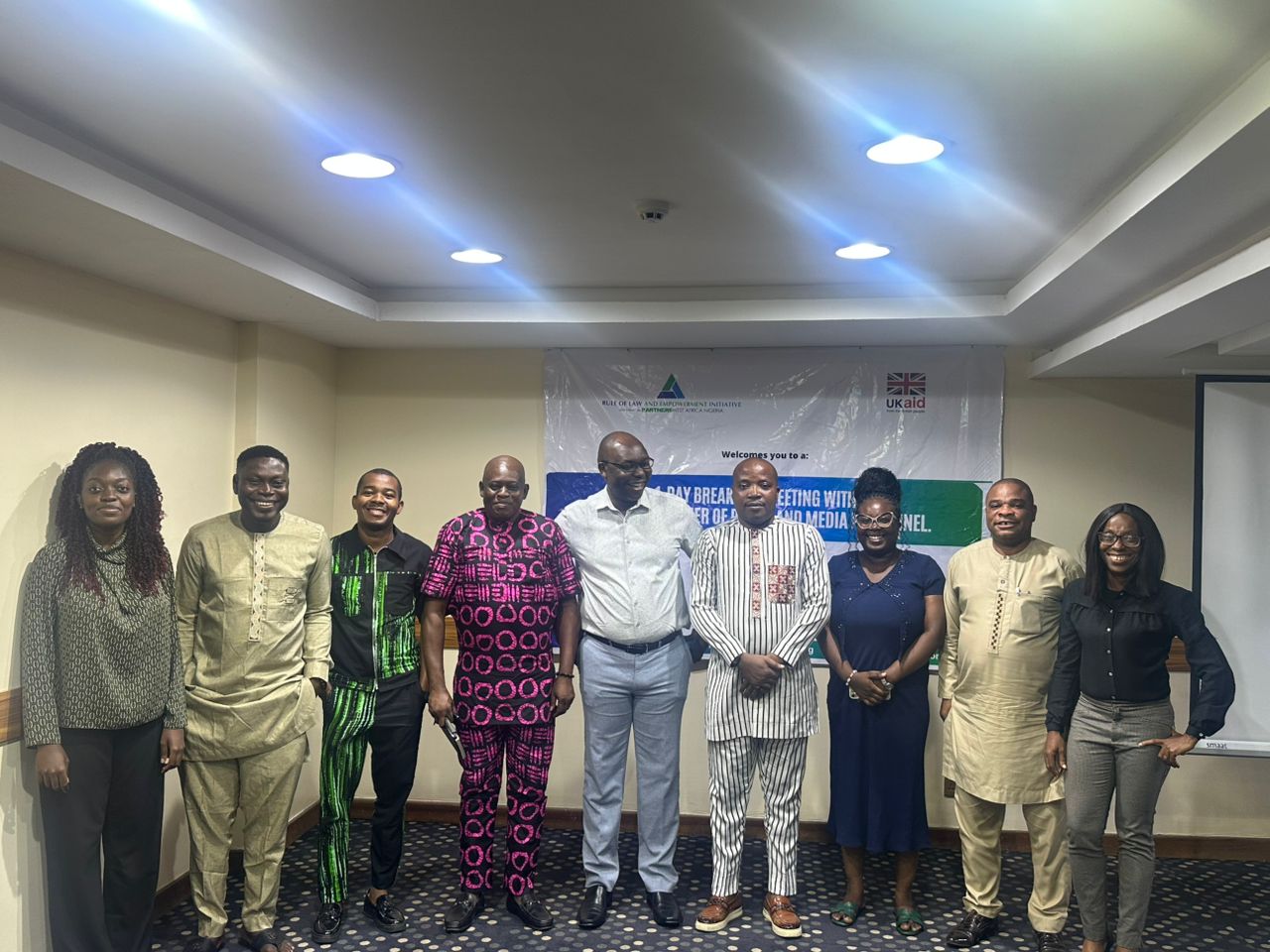
Stakeholders in Nigeria’s security and media sectors on Friday deepened conversations around accountability, transparency and public trust as journalists and senior police officers converged in Lagos for a Police–Media Dialogue Session organised by the Rule of Law and Empowerment Initiative, also known as Partners West Africa Nigeria (PWAN).
The one-day engagement, held at The Colossus, Ikeja, formed part of PWAN’s broader intervention to strengthen security governance and citizen participation, particularly in communities affected by insecurity, weak institutions and rights violations. PWAN is a women-led, non-governmental organisation working across Nigeria and West Africa to advance inclusive governance, protection systems and access to justice.
Speaking at the session, Programme Assistant at PWAN, Ms. Ore Fatuyi, said the organisation’s approach to police reform is anchored on humanitarian sensitivity and inclusiveness. According to her, effective security governance must consciously address the needs of vulnerable groups while reinforcing professionalism and accountability within law enforcement institutions.
PWAN, with support from the UK Foreign, Commonwealth and Development Office (FCDO), is implementing the project, “Enhancing Public Trust and Gender-Responsive Policing in Nigeria Through the Effective Implementation of the Police Act 2020,” across the six geopolitical zones. The initiative seeks to strengthen institutional accountability, operationalise the Nigeria Police Force Gender Policy, and increase public awareness of the revised Police Regulations, with a focus on reducing rights violations, including gender-based violence.
The Lagos dialogue provided a platform for frank, solution-oriented discussions on police–media relations, ethical reporting, public communication and the role of journalism in shaping public perception of policing. Participants examined practical ways the media can support the effective mainstreaming of the Police Act 2020 while promoting transparency and public confidence in the Nigeria Police Force.
Held under the Chatham House Rule, the session encouraged open engagement by allowing participants to freely use insights gained without attributing statements or identifying speakers. Organisers explained that the format was designed to create a safe, non-adversarial space for sincere exchanges between senior police leadership and media practitioners.
During interactive question-and-answer sessions, journalists raised concerns about operational challenges, including access to information, verification of police statements, and restrictions encountered during reporting within police facilities. Discussions also explored how socio-economic realities intersect with security outcomes and how responsible journalism can strengthen accountability and community trust.
Technology featured prominently, with participants highlighting digital platforms, social media and data-driven reporting as tools for improving information flow, public engagement and real-time communication between the police and citizens.
While emphasising collaboration during the dialogue, PWAN acknowledged the professional obligations of the media. Dedicated time was therefore provided after the formal session for interviews with the Commissioner of Police or designated representatives, allowing journalists to conduct on-the-record engagements.
Overall, participants agreed that policing and journalism remain closely linked pillars of society. As Nigeria continues to implement the Police Act 2020, sustained collaboration between law enforcement and the media was identified as critical to translating reform from policy into tangible improvements in public safety, accountability and trust.